Paul Tollett was seventeen years old when he made his first concert poster. It was 1982. The show was at a place called Pizza Supreme in Pomona, California, and the band was his brother Perry's ska group, the Targets. "It was a way to meet girls," Tollett told The New Yorker in 2017. He and Perry had grown up in Pomona after moving from Ohio when Paul was seven, and they were always frustrated that the best punk shows were all in L.A. or Orange County. They spent hours talking about what they called "the immaculate lineup." They resolved to build something of their own.
That obsession — the immaculate lineup, the perfect show, the festival that doesn't exist yet — is what eventually produced Coachella. But the path from a Pizza Supreme flyer to the world's most powerful music festival ran through a lot of failure first.
HOW GOLDENVOICE BEGAN
In 1986, Tollett drove to a Goldenvoice show in Long Beach to see a Bad Manners concert. Goldenvoice was run by Gary Tovar, a legendary figure on the L.A. punk scene. "I had a friend bring me to the box office, which was full of smoke — Gary chain-smoked pot — and we talked all night about music," Tollett recalled. "At the end, he handed me a box of flyers for a Big Audio Dynamite show. He said, 'Can you hit the stores in the Inland Empire?' I remember thinking I was working for Goldenvoice. Though no one said it."
Tollett was a chemistry student at Cal Poly Pomona at the time. He eventually dropped out in his senior year to work for Goldenvoice full time. By 1991, he and Rick Van Santen — a longtime associate of Tovar's — bought the company outright. Their early shows featured Black Flag, Jane's Addiction, and N.W.A. "I was Gary's right hand from '86 to '91," Tollett said. "To this day, I can kind of remember everything he said. Not specific words — feelings." The lesson that stuck most: pay bands well, and pay your vendors fairly. That reputation for fair dealing would later save him.
In 1996, Tollett and his brother converted a Thrifty drug store in Pomona into a 600-capacity live music venue — the Glass House. No Doubt was the first band to play it. The venue became known for all-ages rock and punk shows and is still operating today.
THE IDEA FOR COACHELLA
The concept for Coachella came out of a practical problem. The bands Goldenvoice was working with — the Red Hot Chili Peppers, Nirvana — were growing faster than the company could keep up with. "Those bands grew faster than we did," Tollett said. "We couldn't afford the deposits to secure the buildings." The solution was lateral: "We can't own an arena, but there are fields everywhere."
In 1993, Goldenvoice staged a Pearl Jam show at the Empire Polo Club in Indio, California — a 700-acre property in the Coachella Valley. The show was wild and a little scary. "We had been so into the grunge thing that I never noticed how beautiful the mountains were," Tollett said.
In 1997, he had photographs of the polo grounds taken and made up a pamphlet touting a possible festival. That summer, he flew to the Glastonbury festival in England with a stack of pamphlets to pitch the concept to bands and managers. It was raining. "It was mind-blowing," he said. "Worst rain ever. We had this pamphlet I was giving out, showing sunny Coachella. Everyone was laughing."
THE FIRST COACHELLA: NEARLY BANKRUPT
The first Coachella Valley Music and Arts Festival took place in October 1999. The lineup included Beck, Morrissey, and the Chemical Brothers. Tollett announced it in August — sixty days out. "To break a brand-new festival sixty days away is financial suicide," he later admitted. "But we didn't know that." The announcement also landed the same week as Woodstock '99, a near-disaster involving riots, mud, and fire. It was 107 degrees at festival time.
The festival lost between $850,000 and $1 million. Goldenvoice nearly went under. Tollett's history of fair dealing with bands and vendors — learned from Tovar — was what saved him. Agents worked out long-term payment plans. Some bands let him slide. He sold his house. Then he sold his car. "It was really tough," he said. "I tend to dissect failures meticulously, but I'm never embarrassed by them or let them bog me down. Just take a shower and move on — some of the failures have needed two showers, though."
AEG, THE SECOND WEEKEND, AND THE ASCENT
In 2001, AEG — which had just opened the Staples Center — acquired Goldenvoice. They told Tollett to keep doing the festival. "They said, 'Oh, and we want you to keep doing the festival you did.' I said, 'Well, we lost a lot of money.' They said, 'Yeah, so? It's the first year, you're going to lose money.' That had never occurred to me." In 2004, AEG bought half of Coachella while Tollett retained the other half and controlling interest.
The festival grew steadily through the 2000s. In 2011, Tollett proposed a second weekend with the same lineup. His partners were skeptical. His pitch was simple: "What's better than Coachella? Two Coachellas." It worked. By 2012, Coachella had expanded to six days over two consecutive weekends. The 2018 festival drew approximately 250,000 people. The 2019 festival sold out in six hours.
In 2016, Tollett staged Desert Trip — "Oldchella" — a twin-weekend classic rock festival at the Coachella site featuring the Rolling Stones, Bob Dylan, Paul McCartney, Neil Young, Roger Waters, and the Who. The gross was $160 million — the largest music festival box office in history at the time. To book the Stones, Tollett flew 6,000 miles to Buenos Aires, where they were performing, and pitched Mick Jagger in his dressing room at La Plata Stadium. The meeting lasted twelve minutes. "Is this a period piece?" Jagger asked. "No," Tollett replied. "The Zombies aren't invited."
HOW HE BOOKS IT
Tollett books all 150-plus acts at Coachella himself, negotiating every offer with agents over a six-month process. Headliners receive between $3 million and $4 million. Acts on the lowest lines of the poster may make less than $10,000. "Agents will say, 'They're a second-line band at Coachella!' " Tollett said. "Rarely has typography been so closely monetized." He has gone, in his words, "to the mat over one point size" in font debates over poster placement.
His philosophy on the festival experience has never changed: "I wouldn't let sponsors' logos on the stages. I feel like when the band is playing it should be you and the band, and it's a sacred moment." He controls every aspect of the operation — food, beverage, ticketing — rather than selling those rights to outside vendors. "If the concession guy is in control, water will go from two bucks to five bucks when you're not looking."
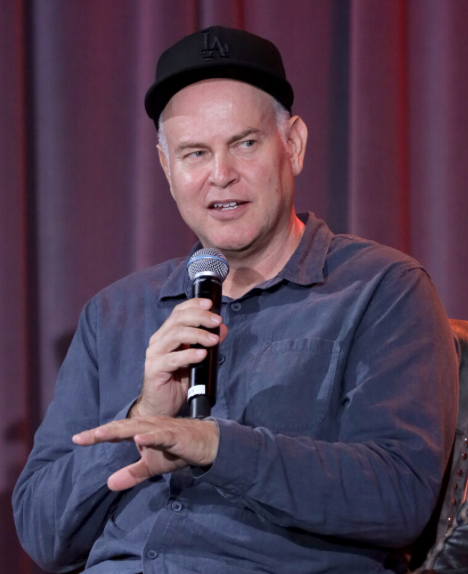
The New Yorker's John Seabrook, who profiled Tollett in 2017, described him as "the great impresario of our time" — a man who looks like he's there to pack up the gear but is actually building the future of live music. He was wearing a Dodgers cap. He always is.
COACHELLA 2026: THE COMEBACK
For a few years, Coachella faced questions about whether the festival had lost its edge — lineups that felt safe, sellouts that didn't materialize. Tollett answered those questions in 2026 by doing what he's always done: reading the culture before anyone else did.
The 2026 lineup leaned hard into today's pop landscape — Sabrina Carpenter, Justin Bieber, and Karol G as headliners — uniting EDM fans, Latin music aficionados, and Beliebers under the same desert sky. The announcement came in September 2025, four months earlier than the previous year's reveal. The gamble paid off: both weekends sold out in three days.
During her headline set — a full Sabrinawood production, an ode to old Hollywood — Carpenter paused to address the crowd. "I want to thank a couple of people. I want to thank Paul. Paul, if you're here, you're the guy." Some fans on social media thought she was thanking Paul McCartney. Those in the industry knew exactly who she meant.
Pollstar named Tollett a 2026 Impact 50 honoree, noting that Goldenvoice is "poised to keep the momentum going into 2027." The advance sale for Coachella 2027 — April 9–11 and 16–18 — sold out in hours, without a lineup announcement. The festival returns to the Empire Polo Club in Indio. The mountains are still beautiful. Paul Tollett is still wearing a cap.
